
Mention
Something was said. It may be useful, irrelevant, or better handled privately.
Emelyn helps you collect relevant conversations, see the evidence behind a repeated need, choose an angle, prepare channel-specific posts, and use the response to sharpen your strategy.
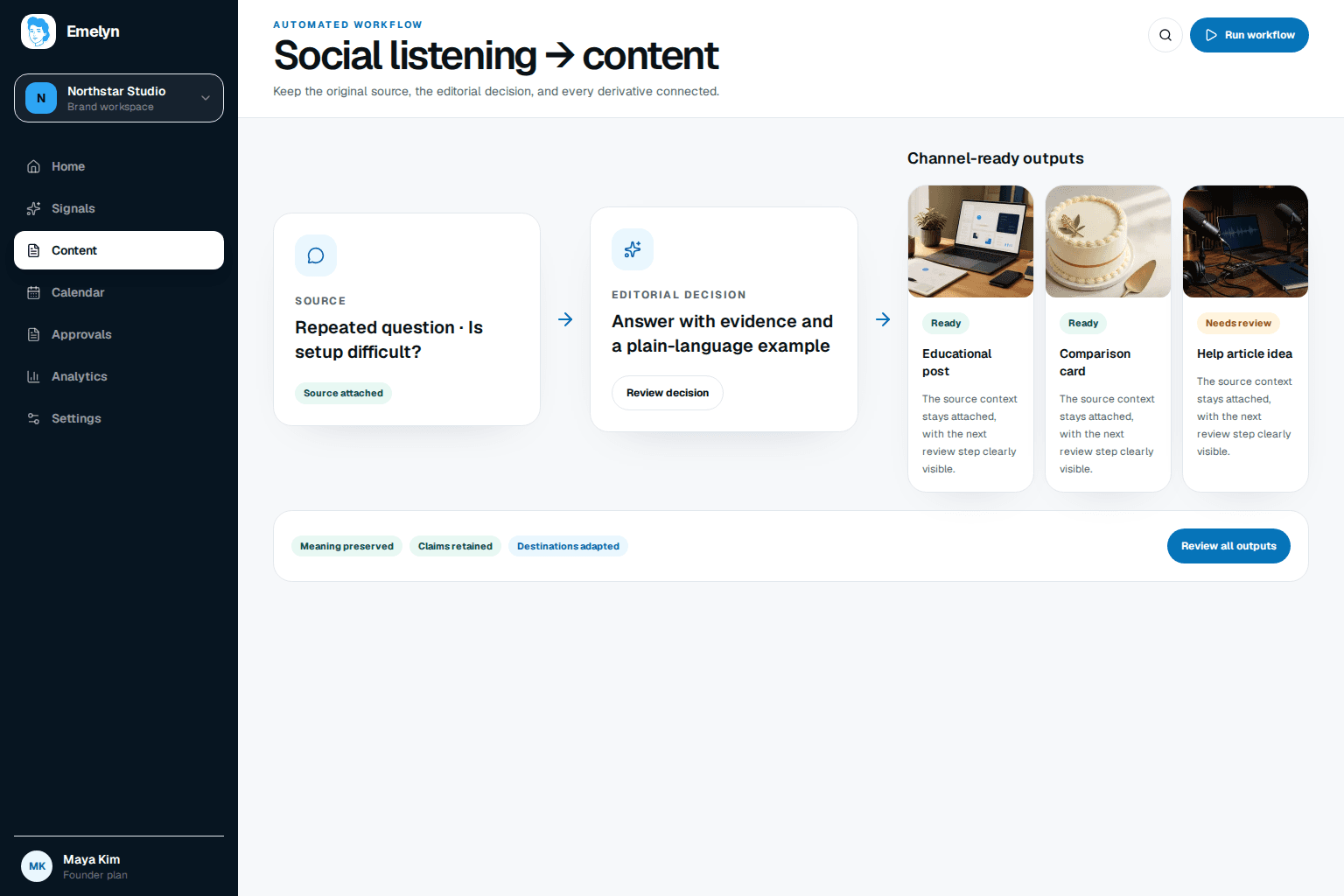
A dashboard can show hundreds of mentions. The useful work is deciding which conversations belong together, why they matter, and whether content is the right response.
Something was said. It may be useful, irrelevant, or better handled privately.
Several relevant sources point to the same need, change, or misunderstanding.
A clear point your audience can understand, use, question, or act on.
Without a question, social listening becomes an expensive stream of unrelated mentions. A short brief tells Emelyn what counts and what to leave out.
This fictional product example demonstrates the workflow. The evidence stays visible so the angle can be challenged before it becomes content.
Customer forum
People can follow the steps, but hesitate when two setup options sound alike.
Product review
The first task is possible, but the language makes the product feel harder than it is.
Public discussion
New users ask for a plain-language comparison before choosing a setup path.
Teach the choice customers are trying to make. Do not turn three observations into a universal claim.
3 source notes attached
Each draft does a different job. Neither copies a forum comment or pastes the same caption into two channels.
A setup guide should not begin with two labels only the product maker understands. Start with the decision: ‘Choose this when…’ Then explain the setting.
Evidence attached
A four-frame comparison: the question, option A, option B, and the simplest way to decide.
Evidence attached
Saved source rules can keep gathering evidence. A new angle still needs scrutiny when the evidence, topic, or claim is uncertain.
Keep it as an observation. Do not call it a pattern yet.
Use the topic without exposing the person, account, or exact message.
Show the disagreement and ask for a narrower listening question.
Pause the draft until a trusted source supports the claim.
Recheck the angle before a scheduled post publishes.
Judge the post by the job it was meant to do. Compare it with other explanation posts, then decide whether onboarding clarity deserves a larger place in the strategy.
Do people describe the decision more clearly or ask a better follow-up question?
Do the right readers save the explanation or visit the relevant guide?
Does the original confusion appear less often, stay the same, or shift?
Keep the angle, narrow it, stop it, or make onboarding clarity a content pillar.
Public discussions consistently separate collection from judgment: define the question, listen where the audience actually talks, find repeated friction, and keep a person involved before acting.
Recurring questions and frustrations are raw material for content—when the listening goal is clear.
Read sourceComments, support themes, reviews, and real conversations preserve the language people naturally use.
Read sourceA listening strategy begins with an objective and organized sources rather than an undirected feed.
Read sourceBegin with a specific question, collect relevant conversations, look for a repeated need or misunderstanding, and turn that pattern into an angle. Keep the source evidence attached while the post is written and reviewed.
No. A mention may need a reply, support action, product fix, or no action at all. Content is appropriate only when the pattern is useful to a wider audience.
Public visibility does not automatically make a quote appropriate for brand content. Use the underlying theme by default and get permission before featuring a person or identifiable story.
Collection, grouping, and draft preparation can follow saved rules. New sources, sensitive topics, uncertain claims, direct quotes, and changed drafts should return to review.
Choose a content job first. For an explanation, look at useful saves, qualified replies, guide visits, and whether the same confusion keeps appearing—not likes alone.
Pillar
Choose sources and exclusions that can reveal a decision, not merely count mentions.
ExplorePlatform
Use the audience's language to open a useful discussion without copying the source.
ExploreIntegration
Collect new public source items once and keep duplicate handling visible.
ExploreFree tool
Find the overlap between repeated questions, your expertise, and credible evidence.
Explore