
Paid split test
The platform splits an audience
Supported ad tools can show variants to controlled audience groups at the same time. That is closer to a formal A/B test.
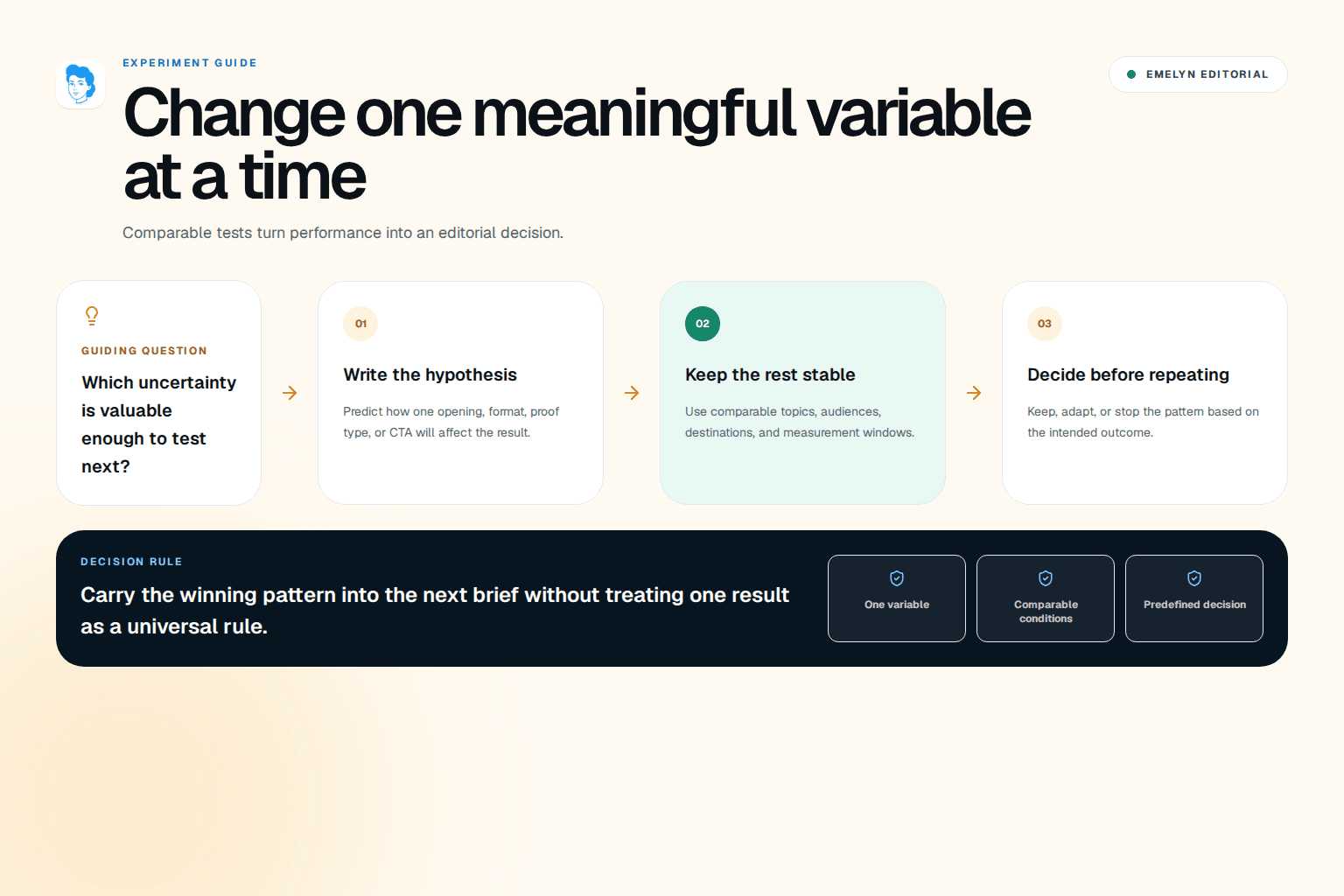
A useful social media content experiment compares repeated, similar posts while changing one meaningful choice. Decide the question, primary measure, comparison, and next action before publishing. Organic results are directional evidence, not a clean laboratory verdict.
Paid split test
Supported ad tools can show variants to controlled audience groups at the same time. That is closer to a formal A/B test.
Organic comparison
Timing, distribution, audience mix, news, and competition can all shift. Repetition can reveal a useful pattern, but not isolate cause with the same confidence.
This example tests an opening style without changing the platform, topic family, format, or intended audience.
Does a customer-question opening earn more qualified replies than a statement opening?
Only the opening style: question versus statement
LinkedIn, audience, topic family, text format, weekday window, and no paid distribution
Replies that contain a real question or relevant experience
Use the stronger opening in the next four posts, retest, or keep both if the result is mixed
Pick a hook, format, length, timing window, call to action, or another choice you can apply consistently.
Use several pieces in each version. Alternate them so your strongest topic is not reserved for one side.
Note paid boosts, collaborations, major news, account growth, missed publishing, and anything else that changes the comparison.
Compare the primary measure, inspect the actual responses, and choose keep, retest, or inconclusive.
A product launch and an evergreen lesson cannot tell you which hook worked.
Choosing views after clicks disappoint makes the hypothesis meaningless.
A boost, collaborator, mention, or live event changes the audience it reached.
A winning carousel does not mean every idea should become a carousel. Ask which part may have helped.
01
The same direction appears across several comparable posts. Use it in a small next batch and keep checking.
02
The result runs against the hypothesis. Keep the evidence and change the next test—not the history.
03
The posts were too different, the sample too small, or outside events too strong. Narrow and repeat, or stop.
Research method: live US-English Google and DataForSEO results, current experiment guides, official paid split-testing documentation, Reddit discussions about noisy organic comparisons, and local Emelyn prospect evidence, checked 29 August 2026.
Reddit Ads split testing Sprout experiment guide Organic-testing discussion
Editorial status: author and reviewer unassigned; last checked 29 August 2026. Corrections: hello@emelyn.ai.