
Make it fair
Use the same dates and record size, volume, and why each account is comparable.
This social media competitor analysis template makes unlike accounts visibly unlike. Compare the same period, normalize the baseline, read the real questions, and finish with an original move—not a copy of the winning post.
Explore the example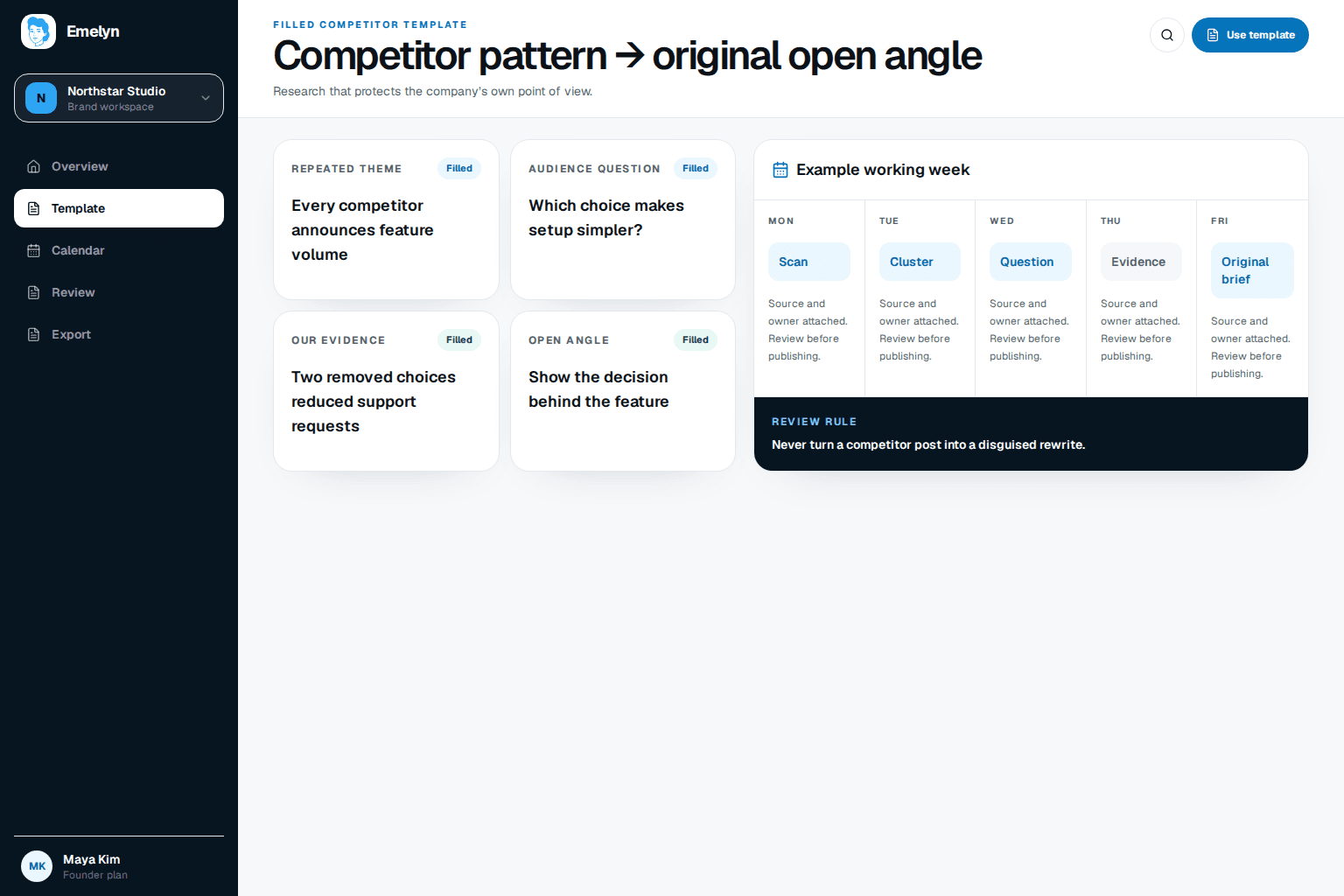
A useful comparison separates three jobs that spreadsheets usually blur together.
Use the same dates and record size, volume, and why each account is comparable.
Look at formats, recurring hooks, real questions, and the action each post asks for.
Name the unmet need, then answer it with evidence only your business can provide.
The populated bakery example shows a direct peer, a larger local peer, and a national reference account. The final two columns turn observation into an unmet need and a move your business can honestly own.
Everything is editable here. Your changes stay in this browser until you download the file.
Start with two or three accounts that serve a similar customer at a similar scale. Add a larger reference account only when you label why it is not directly comparable.
Use the same review period and record audience size, publishing volume, formats, useful questions, clear customer actions, and a normalized baseline. Raw follower and like totals rarely make a fair comparison.
Study the question being answered, the evidence used, the format, and what remains unresolved. Your final field should be an original move supported by your own experience, customers, or product.
Monthly is enough for most small accounts. Review sooner when a competitor changes its offer, audience, format mix, or posting pattern in a way that affects your market.
See the workflow for learning without imitating.