
Use the canonical feed
Prefer the publication’s own RSS or Atom URL. Avoid scraped copies and redirect chains.
Watch a publication feed, ignore repeats and ineligible items, keep the original source attached, and draft a different angle for every channel.
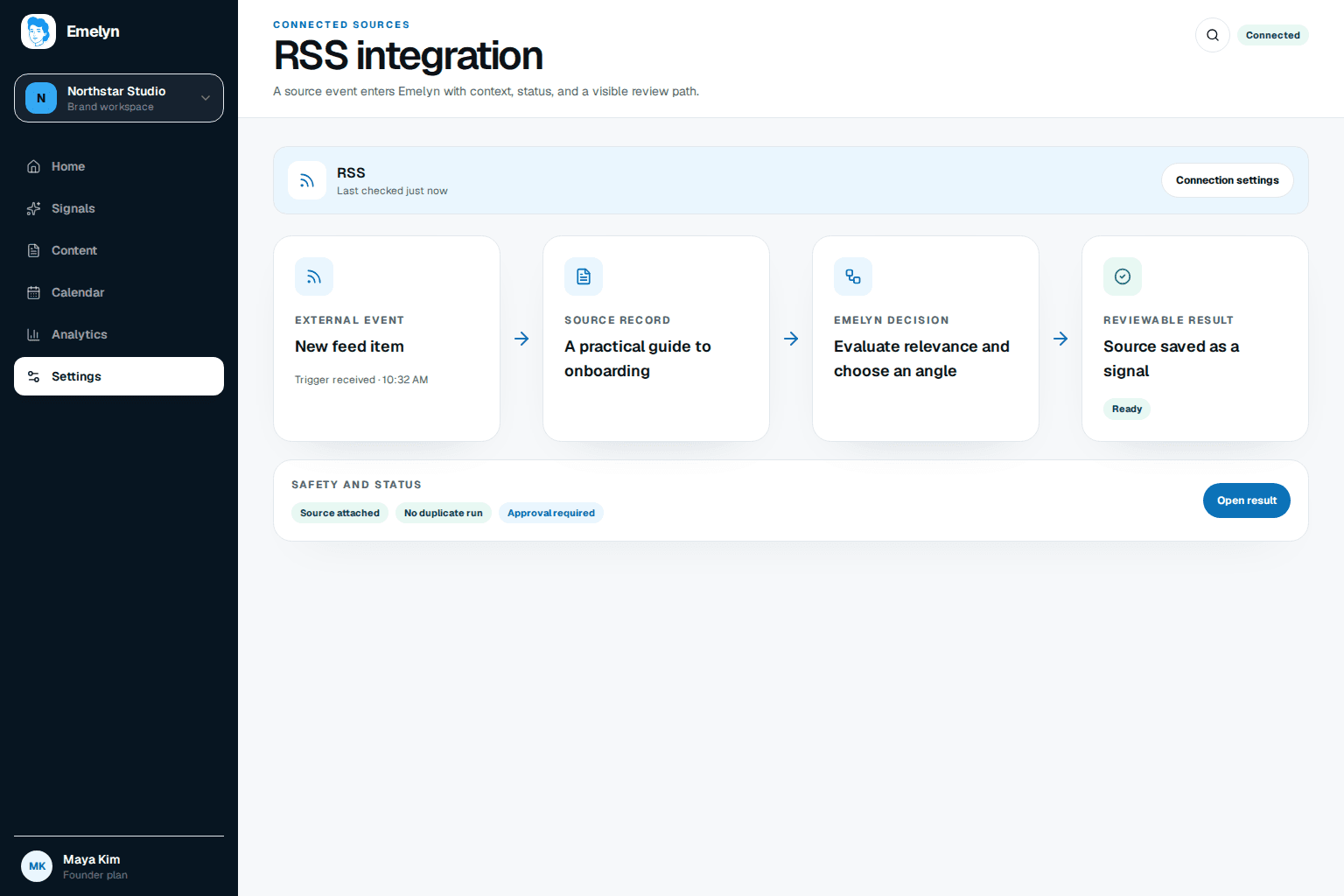
RSS is public reading, not permission to publish anything you find. Connect a feed you own or are allowed to use, choose eligible categories, and send the first items to review.
Prefer the publication’s own RSS or Atom URL. Avoid scraped copies and redirect chains.
Use the item GUID first and a normalized canonical URL as a second duplicate check.
Respect feed TTL and server responses. Faster polling rarely makes the campaign better.
Paste this setup into the RSS connection, replace the feed URL, and tune the categories. It creates a reviewable campaign; it does not auto-post the feed title.
Expected output
One source record, several channel-specific drafts, and a saved item identity for later checks.
{
  "feed_url": "https://example.com/news/feed.xml",
  "poll_every_minutes": 15,
  "include_categories": ["product", "customer stories"],
  "exclude_title_contains": ["sponsored"],
  "dedupe_by": ["guid", "canonical_url"],
  "on_new_item": "create_campaign_for_review"
}
Connection recipe revision 1.0 · RSS 2.0 and Atom 1.0 intake · Last tested 29 August 2026.
A feed item gives Emelyn evidence and a destination link. It is not a ready-made social post.
<item>
  <guid isPermaLink="false">release-2026-08-29</guid>
  <title>A smaller release with a useful lesson</title>
  <link>https://example.com/blog/smaller-release</link>
  <pubDate>Sat, 29 Aug 2026 09:30:00 GMT</pubDate>
  <description>What changed, who it helps, and why.</description>
  <enclosure url="https://example.com/release.png" type="image/png" />
</item>| Feed field | Emelyn field | Why it matters |
|---|---|---|
| guid or atom:id | source_item_id | Stops the same item being used twice |
| link | source_url | Keeps the original page attached |
| title | source_title | Starting context, not the final caption |
| description or content | source_text | Evidence for angles and claims |
| pubDate or updated | source_published_at | Orders fresh items |
| enclosure or media:content | source_media | Optional image or audio reference |
The delivery log keeps fetch behavior separate from content decisions, so a rate limit cannot silently erase a source.
Read the feed, compare saved IDs, and create only unseen eligible items.
Keep the existing checkpoint. Do not parse or create anything.
Honor Retry-After when present, then back off. Never treat the body as the new feed.
Keep the last good checkpoint and show the parse error. Never guess missing fields.
Network limitOne active fetch per feed. Redirects, timeouts, and oversized documents stop safely.
Content limitHTML is sanitized. Attachments are references until a person confirms usage rights.
Credential limitPublic feeds need no secret. Private feed credentials are encrypted and never placed in logs or campaign copy.
Practitioners ask for keyword filters, reliable duplicate control, and clear rate-limit handling. The setup follows the RSS and HTTP contracts and keeps source rights as a human decision.