
The point
A reader should know the lesson before they reach the third paragraph.
Turn a real decision, lesson, or result into a professional post with evidence people can examine. No invented epiphany. No engagement-bait story arc required.
Build my LinkedIn post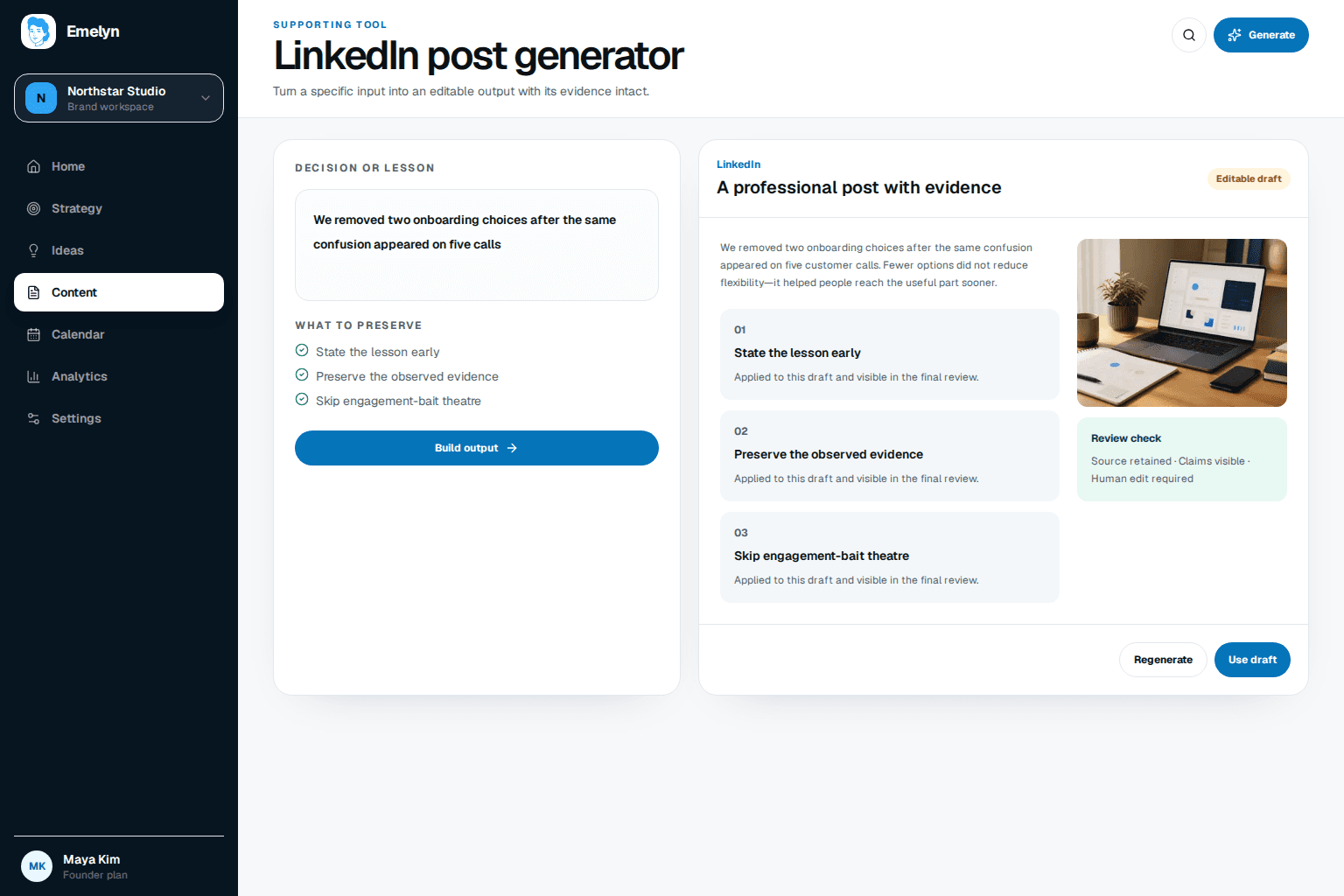
The strongest LinkedIn posts usually have a real observation underneath them. Add what you learned and what you saw—not a vague topic such as leadership or growth.
Your entries stay in this browser. This first result is not saved or sent to Emelyn.
A reader should know the lesson before they reach the third paragraph.
A decision, customer phrase, result, or failure makes the post yours.
Ask for replies only when another perspective could improve the thinking.
Example
“We removed two onboarding choices after hearing the same confusion on five calls. Completion improved. The lesson was not ‘simplify everything.’ It was: remove a decision the customer cannot yet make.”
The example works because the input, change, and limit are visible. It does not turn one result into a universal law.
Use one lesson, decision, or observation; name who it may help; and add the evidence you actually saw. A specific input produces a more credible post than a broad topic.
It creates an opening, but it does not bolt on a dramatic claim just to stop the scroll. The hook should earn attention by making the point clear.
You can describe the tone here. For a reusable guide based on several writing samples, use the brand voice generator.
No. Check the evidence, remove any phrase you would not say aloud, and decide whether the closing question is one you genuinely want answered.
The generator handles one draft. The platform page covers the ongoing channel workflow.